
Cerebro de Einstein era diferente, concluye estudio

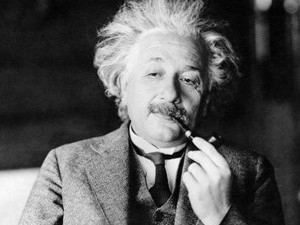 Era algo bastante lógico, pero la ciencia no lo había comprobado hasta ahora: el cerebro de Albert Einstein, una de las mentes más brillantes del siglo XX, era diferente.
El estudio preliminar, divulgado en la revista Brain, fue encabezado por el antropólogo Dean Falk, de la Universidad Estatal de Florida. Allí se describen y analizan 14 fotos del cerebro de Einstein que nunca habían sido publicadas con anterioridad.
El equipo de científicos comparó las fotos con los cerebros de otros 85 “mortales” y llegó a conclusiones fascinantes. “Aunque el tamaño y la forma asimétrica del cerebro de Einstein eran normales, el prefrontal, el sistema somatosensorial, el córtex motor primario y las cortezas parietal, temporal y occipital eran extraordinarias”, explica Falk.
El autor concluyó que esa diferencia “puede haber proporcionado las bases neurológicas de algunas de sus habilidades viso espaciales -la capacidad de distinguir por medio de la vista la posición relativa de los objetos en el espacio- y matemáticas, por ejemplo”.

LiveScience explica que los lóbulos frontales -los que más llamaron la atención- están vinculados a la planificación y el pensamiento abstracto. Asimismo, destaca que los pliegues adicionales le permitirían realizar más conexiones entre las células de su cerebro, lo que le habría permitido desarrollar ideas complejas, como su teoría de la relatividad.
Según recuerda ABC, tras la muerte del físico en 1955, su cerebro fue preservado, fotografiado y seccionado en bloques por el médico Thomas Harvey, quien le practicó una autopsia. Su idea era analizarlo y volcar sus conclusiones en un libro.
Einstein’s brain had unusual lobes and cortex
Albert Einstein’s brain seems to have been packed full of unusually-configured parts that could explain his unusual intelligence, according to a new study by US scholars.
The revelations about the boffin’s brain come from the the journal Brain, which carries a paper titled The cerebral cortex of Albert Einstein: a description and preliminary analysis of unpublished photographs. In the paper, authors Dean Falk, Frederick E. Lepore and Adrianne Noe explain they have enjoyed access to 14 photographs of Einstein’s brain that were previously unknown. The photographs, captured on 35mm film by the pathologist who examined Einstein after his death, spent years in the bowels of various institutions before coming to light in 2010.
Analysis of the snaps, the authors suggest, reveal “an extraordinary prefrontal cortex, which may have contributed to the neurological substrates for some of his remarkable cognitive abilities.” The trio also assert the great physicist’s “primary somatosensory and motor cortices near the regions that typically represent face and tongue are greatly expanded in the left hemisphere” and that his “parietal lobes are also unusual and may have provided some of the neurological underpinnings for his visuospatial and mathematical skills, as others have hypothesized.
The paper also suggests the frontal lobe of the boffin’s brain included “a large ‘knob’-shaped fold (the ‘knob’, known to surgeons as the sign of omega) in the right hemisphere that represents enlarged motor representation for the left hand. This is an unusual feature that is seen in some long-time right-handed violinists.” Einstein was such a violinist.
Overall, the paper ranks Einstein’s brain as of normal size and weight and says that the features noted above hint at enabling unusual levels of cognition in the scientist’s brain. But the paper also points out that neuroscience is a long way from knowing about brain configurations that make us good at particular pursuits. It therefore concludes with a hope “that future research on comparative primate neuroanatomy, paleoneurology and functional neuroanatomy will provide insight about some of the unusually convoluted parts of Einstein’s brain.
Por el respeto a esta libertad de todos, debemos informarte que Feeling.Mx y Radionautas.org se reservan el derecho a editar o publicar mensajes obscenos o bien que atenten contra la ley y la dignidad de terceros. ¡Gracias por tu aportación!
Comentarios
Entrada anterior: Twinkies serán subastados en eBay por cientos de dólares
Siguiente entrada: Madres españolas se desnudan para recuperar autobús escolar


